If you’re building for Workers’ Comp claims,
you’ve probably led with:
Faster triage.
Better nurse routing.
Smarter reserve modeling.
Reduced leakage.
All important.
Not sufficient.
In Workers’ Comp, every claim can become litigation.
Every decision can be scrutinized.
Every note can be subpoenaed.
So when you lead with “AI-powered,”
risk managers hear exposure.
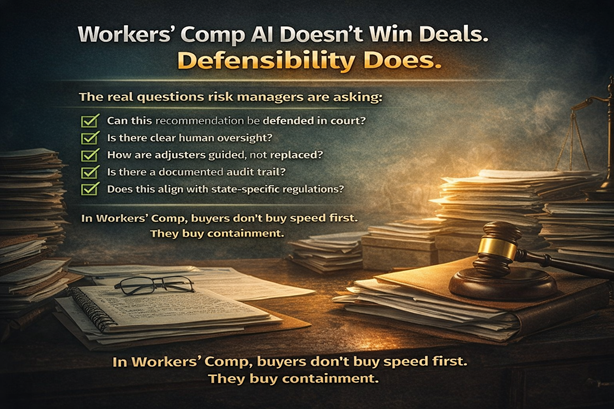
The real questions they’re asking:
→ Can this recommendation be defended in court?
→ Is there clear human oversight?
→ How are adjusters guided, not replaced?
→ Is there a documented audit trail?
→ Does this align with state-specific regulations?
The biggest GTM mistake right now?
Selling efficiency
without defensibility.
Workers’ Comp buyers don’t buy speed first.
They buy containment.
The platforms gaining traction are doing three things differently:
✅ Lead with claim outcome metrics
(reduced severity, faster return-to-work, lower litigation rates)
✅ Define governance clearly
(override paths, documentation standards, review controls)
✅ Equip champions with approval-ready risk language
In Workers’ Comp,
approval moves at the speed of legal comfort.
If your deals stall at risk, legal, or compliance,
it’s not doubt about value.
It’s uncertainty about exposure.
If you want,
I’ll run a quick positioning teardown
and help you rewrite your narrative
through a Workers’ Comp defensibility lens.